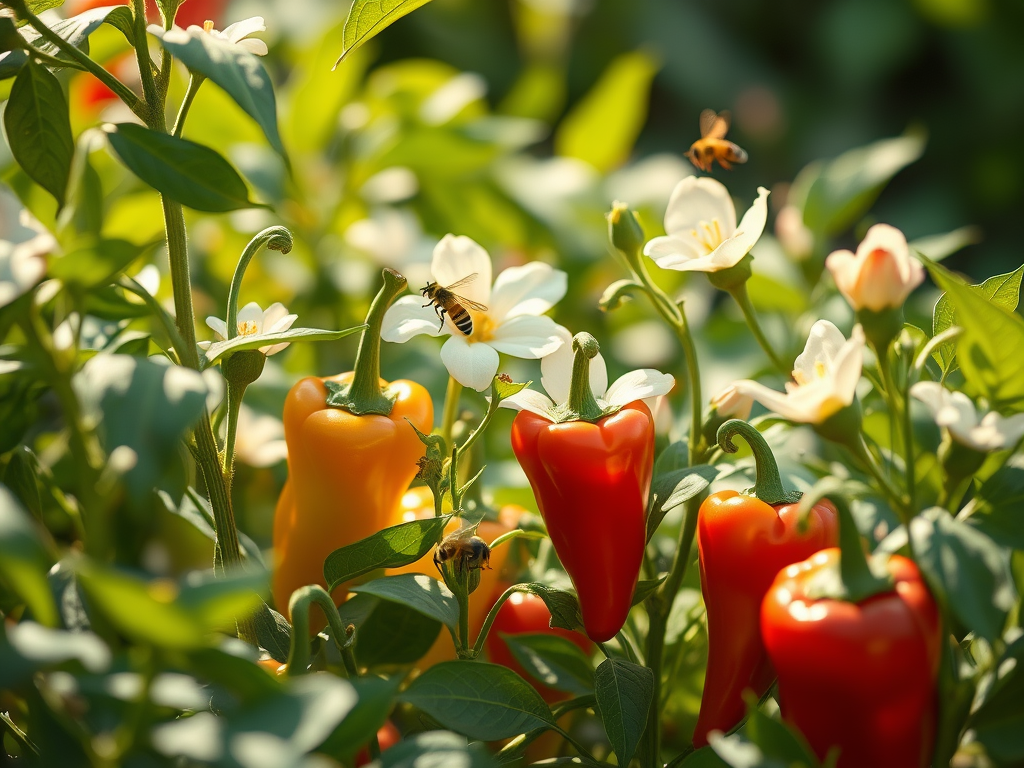
They say you become the sum of the five people you spend the most time with. While that’s true, it doesn’t only apply to human relationships. Plants also take on the characteristics of their neighbors. Humans call it influence; gardeners call it cross-pollination. Pepper plants are especially good at this. It can be helpful or harmful, depending on your goals. So, if you’re interested in making uniquely tasting fruit (peppers have seeds, so they’re a fruit), or want to keep the purity of the variety you’re growing, let’s explore the effects of cross-pollination.
Cross-Pollination in a Nutshell
When you grow mild peppers next to hot peppers, an unexpected dynamic can occur. As the plants start to flower, wind and bees start the pollination process. Pepper plants may begin to show unusual traits when exposed to pollen from another pepper variety. This cross-pollination often goes unnoticed until the plant starts to bear fruit. So, your plants will look the same on the outside, even though cross-pollination with another plant has changed them inside. This simply means that traditionally mild peppers can gain a little heat, and hot peppers might be less fiery. Now, this doesn’t happen all at once. You won’t have your bell peppers tasting like ghost peppers just because they’re grown next to each other, but they could have a slightly different flavor. For curious gardeners, this is great! You could be developing a new pepper variety!
Just like in life, it’s important to be aware of what you surround your peppers with. Their qualities will change over time. Note that this mainly happens internally. You might not realize your bell peppers have cross-pollinated with your ghost peppers until you taste them. So, they’ll still look like mild peppers, but they’re slightly different. Similarly, with people, you won’t see how they’ve changed inside until you see who they’ve been around. They may look the same on the outside, but different outside influences can change them internally.
Controlling Cross-Pollination
Much of this is due to who and what we interact with in our external worlds. The people we surround ourselves with, the content we consume, and our daily habits all “cross-pollinate” our internal state. What you habitually see and hear shapes your internal world and self-identity. That’s why it is vital to be vigilant about what and who you allow into your life garden. They don’t say bad company corrupts good manners for nothing! Integrity and just character should be at the top of your list in discerning if someone should be in your life.
When you want to maintain the integrity and unique qualities of a plant, you need to grow it in isolation. The same applies to life. When you decide to leave your old self behind to protect your character and integrity, isolation becomes the price you pay. This isolation isn’t loneliness, though; it’s solitude. Distractions are what differentiate solitude from loneliness. When we’re lonely, we feel the need to distract ourselves because sitting with our own thoughts and silence becomes too overwhelming. Constantly scrolling social media, binge-watching Netflix, or reaching out to people you shouldn’t be talking to are ways we run from ourselves and the emptiness we can’t seem to fill. These distractions offer only temporary relief, a fleeting high, but they’re never truly enough. They’re just a band-aid for the shadow work we avoid doing.
Solitude, on the other hand, is where you accept that pain and transform it into something creative. That is how we learn about ourselves and integrate the shadow. Writing, producing art, or…GARDENING are all ways to positively alchemize our pain and trauma. We run from loneliness, while we run to solitude.
In Conclusion…
Who and what we choose to cross-pollinate our minds with influences what we decide to do in our isolation. If you’re mainly focused on praise, validation, and admiration, you’ll be like a slightly spicier bell pepper grown just six inches from a ghost pepper plant. That close proximity will have a much stronger effect on the fruit that results. This isn’t to say that a plant grown in isolation is immune to cross-pollination; it isn’t. Physical distance naturally acts as a barrier to undue influence. You have more control over what is produced in this way.
I say all of this to say, choose wisely who you cross-pollinate with. The peppers might surprise you.
